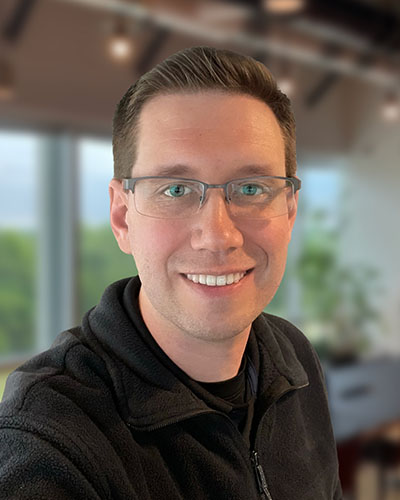

I co-found things, invent things, and (mostly) build things. Here's the short version of where I've aimed that energy over the years — newest first.
Level Lab • Founder & CEO
After years of building interactive experiences — and face-planting into the same brick walls every single time — I finally decided to do something about it. That something is Level Lab: a platform that makes game creation accessible, viral, and (dare I say) fun. It lives at the crossroads of three very Gen-Z identities — content creators, mobile gamers, and social consumers — and lets the AI sweat the technical complexity so you can focus on the creativity and the play. The mission, in four words: game creation for all.
Dimension X • CTO
As CTO of Dimension X, I shipped Bonfire — a no-code VR creation platform that Fortune-500 teams and global brands actually used to build and deploy virtual experiences. (Turns out enterprises like making worlds too.) It was a tidy proof that accessible creation tools aren't just a warm-and-fuzzy idea: give people the right tools and they'll line up to build.
FYR • VP of Engineering
At FYR I wore the VP of Engineering hat and co-invented the rendering algorithms that finally wrestled light-field's infamous performance bottleneck to the ground — enough to run real-time light-field graphics on plain old consumer hardware. (If you've ever wondered why light-field displays always seemed to be “five years away,” that bottleneck is a big part of the answer.) The work pointed in two directions: FYR, Inc., to commercialize the XR light-field technology, and FYR Medical, to bring it to healthcare.
Lockheed Martin • Research Engineer
Before I caught the startup bug, I was a research engineer at Lockheed Martin's legendary Skunk Works®, building highly performant, highly extensible architectures for cutting-edge 3D experiences. Before that, down in the Simulation and System Integration Laboratories (SimSIL), I wrote real-time rendering algorithms and pilot-vehicle interfaces (PVI) for heads-up and head-mounted displays — the kind of glass pilots literally bet their lives on.
Where It Started
It all began with a pair of Electrical Engineering degrees: an M.S. from the University of Virginia and a B.S. from Rice University. The diplomas say “Electrical Engineering”; the transcripts quietly confess to an awful lot of time spent in front of a screen.